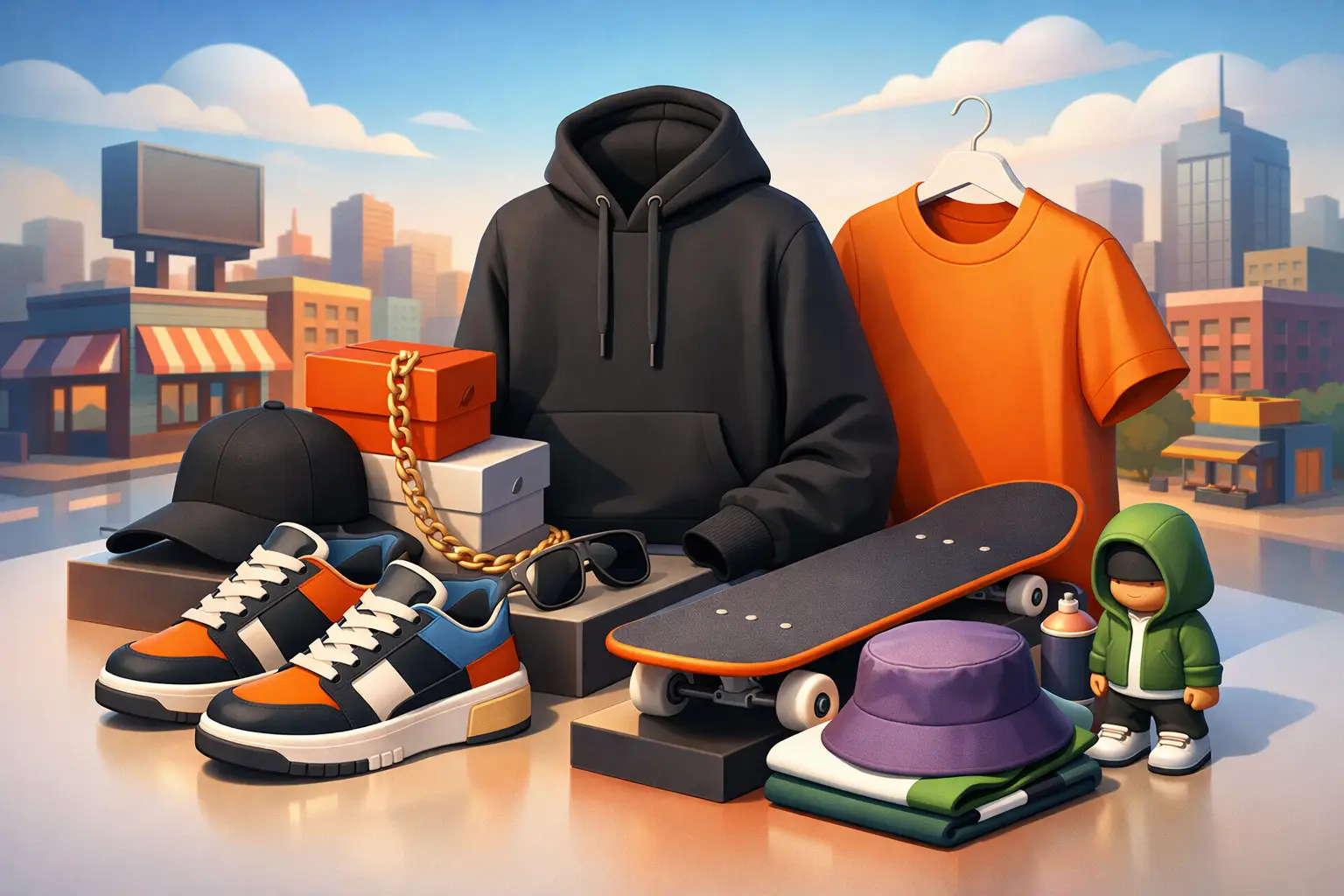
Most people can spot a fit with money behind it. Fewer can spot a fit with a point of view. That gap is where independent streetwear brands win.
They are not built to please everybody. That is the appeal. The best ones come with a sharp visual language, a real perspective, and enough confidence to skip the fake mass appeal. You are not buying into a focus-grouped trend cycle. You are buying a stance.
What independent streetwear brands actually bring
Streetwear has always been bigger than clothes. It pulls from skate, hip-hop, design, sneakers, art, local scenes, and whatever is bubbling outside the polished center of fashion. When a brand is independent, that energy usually hits harder because there is less corporate filtering between the idea and the product.
That matters. A lot of big brands know how to imitate streetwear. Fewer know how to mean it. They can copy the silhouette, the graphic scale, the washed fabric, the oversized fit. They can even hire the right faces. But when every drop is designed to offend nobody and sell everywhere, the product starts feeling empty.
Independent labels usually have the opposite problem. They can be rough around the edges. They might have smaller runs, slower shipping, fewer restocks, or less size depth. But that friction is often part of what makes the brand feel alive. It feels like somebody actually made a choice.
Independent streetwear brands and identity
Good streetwear says something before you do. Not in a corny way. In a real way.
The graphic on the chest, the cut of the tee, the way the hoodie sits, the references buried in the design, the color story, the name itself - all of it signals taste. People read those cues fast. They tell others whether you follow the crowd, remix it, or ignore it completely.
That is why independent streetwear brands hit different for people who care about personal style. They leave more room for specificity. A mall brand can give you trend language. An independent brand can give you identity language.
There is a difference.
One says you know what is popular. The other says you know what fits you.
For Gen Z and younger Millennials, that split matters even more. Style is social now, but it is also archived. Your fit lives on camera, on feeds, in group chats, in tagged photos, in quick impressions. What you wear does not just show up in a room. It shows up everywhere. That makes originality worth more.
Why the best brands feel personal
The strongest independent labels are not just selling shirts and hoodies. They are building a world.
Maybe it is rooted in a local scene. Maybe it comes from a designer's background, a music influence, a design obsession, or a specific attitude toward culture. Whatever the source, the point is the same - the brand stands for something beyond product.
That does not mean every piece needs a manifesto printed on it. Sometimes the message is subtle. Sometimes it is loud. Sometimes it is just consistency. But people can feel when a brand has a center.
That center is what separates an independent label from random graphic merch with a logo slapped on the front. Anybody can print. Not everybody can build a visual voice.
And that voice matters because streetwear is crowded. Very crowded. Every week there is another drop, another collab, another brand trying to look exclusive. Attention moves fast. If a label does not have a point of view, it disappears just as fast.
The trade-off is real
There is a reason giant brands still dominate shelf space and social reach. Scale solves problems.
Big labels can produce in volume, keep prices more predictable, and restock bestsellers quickly. They can spend their way into visibility. They can also absorb mistakes that would hurt a smaller brand badly. If a collection misses, they move on.
Independent brands do not always have that cushion. A limited run can sell out before everybody gets a shot. A great piece may never come back. Pricing can be higher because the order quantities are lower. Quality can vary more from one drop to the next if a young brand is still tightening up production.
That does not mean independent is automatically better. It means you are choosing what matters most to you.
If you want consistency, easy access, and broad availability, a larger brand might serve you better. If you want style that feels more personal, less diluted, and more connected to an actual creative voice, independence starts looking a lot better.
How to spot the real ones
Not every small label deserves instant respect just because it is small. Size is not authenticity.
The real test is whether the brand feels like itself. Look at the graphics, cuts, product names, photography, captions, and overall pacing. Does it all come from one clear mindset, or is it chasing whatever is trending this week?
A strong independent brand usually has discipline. The pieces connect. The visuals feel intentional. The messaging is tight. Even when it experiments, it still sounds like itself.
Weak brands often confuse noise for identity. They overdesign everything, borrow references without saying anything new, and hide behind fake scarcity. Limited does not mean meaningful. Hype alone is not personality.
If you strip away the marketing, there should still be a point of view left standing.
Why cultural credibility cannot be faked forever
Streetwear has always had a radar for fake energy. Sometimes the market ignores that for a while if the product is hot enough. But over time, people can tell when a brand is participating in culture versus just extracting from it.
That is where independent labels often have an edge. They are usually closer to the communities, references, and scenes that shape the clothes in the first place. They are not translating culture for a boardroom. They are speaking from inside it, or at least from somewhere genuinely adjacent to it.
That does not mean every independent founder is automatically credible. But it does mean there is less distance between the source and the expression. The message lands cleaner when it is not passed through ten layers of approval.
And for customers who care about originality, that proximity matters. People want brands with pulse. Not just polish.
The future belongs to brands with a voice
The market is too saturated for generic labels to hold attention for long. People have options now. Too many options, if we are being honest. So the brands that keep growing are usually the ones that stand for something clear.
That could mean political edge. It could mean regional pride. It could mean humor, art direction, community, rebellion, or pure visual boldness. The exact lane depends. But silence is not a strategy anymore.
This is why independent streetwear brands keep pulling people in. They are often better at saying one thing clearly instead of trying to say everything at once. They know who they are for. They know who they are not for. That kind of clarity is magnetic.
For a brand like Fresh Po'Boy, that same logic applies. Streetwear hits hardest when it speaks. Not when it blends in.
What buying independent really means
When you buy from an independent label, you are not just buying fabric and ink. You are backing a creative decision. You are putting money behind a brand voice, a visual world, and a way of showing up that resists the usual mass-market flattening.
That does not make every purchase deep or dramatic. Sometimes a tee is just a tee. But sometimes it is also proof that style still has room for risk, personality, and local energy. That is worth something.
The next time you are deciding between the safe option and the one with actual character, pay attention to what your clothes are really saying. Anybody can wear what is available. Not everybody wears something that sounds like them.