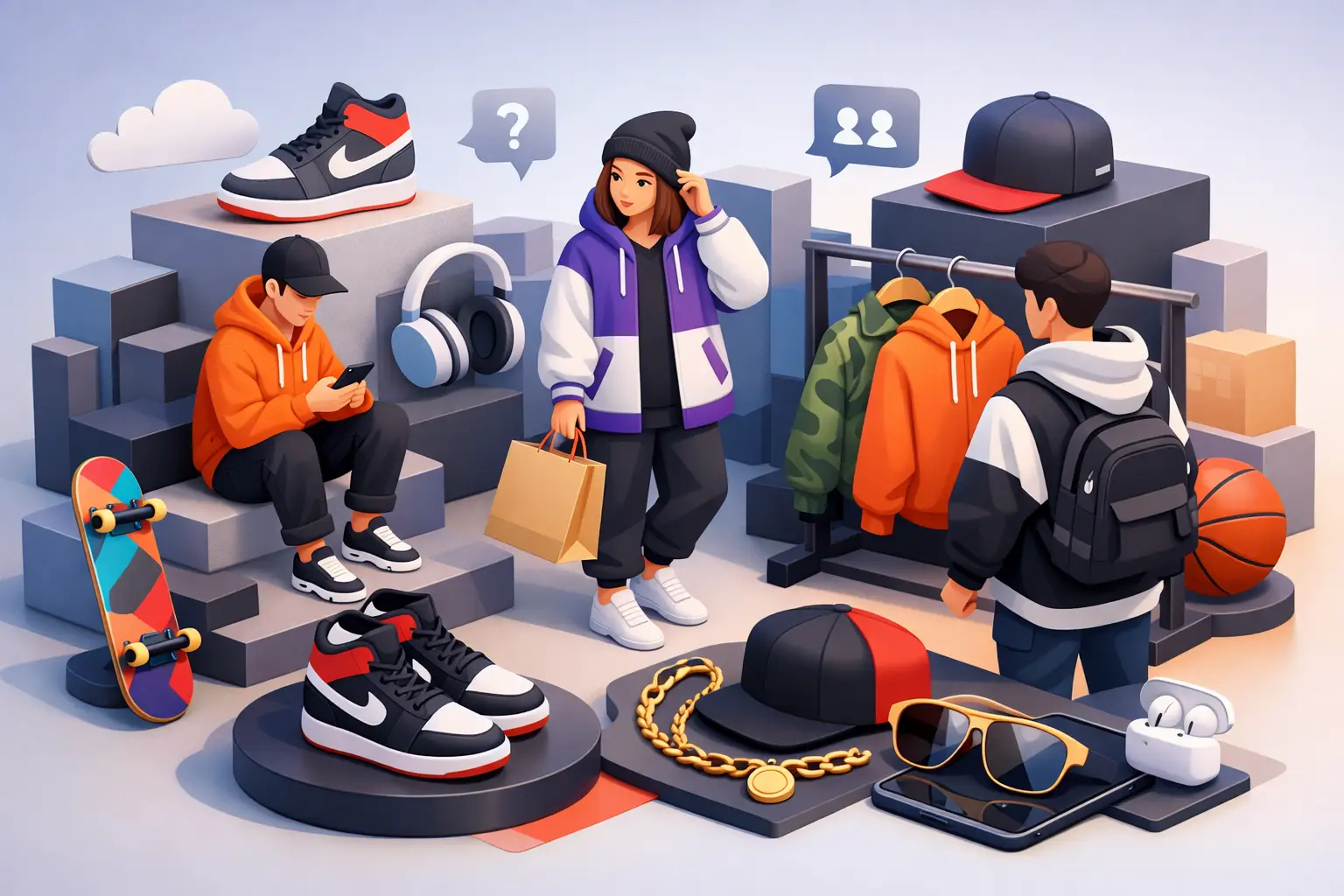
You can tell a lot from a fit before a word gets said. The cut of the hoodie, the graphic on the tee, the beat-up sneakers that still hit, the way somebody puts it all together - that’s language. So when people ask why do people wear streetwear, they’re really asking why clothing became one of the clearest ways to show identity in public.
The short answer is simple. Streetwear lets people say something without explaining themselves. It carries attitude, taste, influence, community, and mood all at once. That’s why it keeps pulling people in, even as trends change.
Why do people wear streetwear for identity?
Because basics can cover your body, but streetwear can show your point of view.
A lot of people are not looking for clothes that just "go with everything." They want pieces that feel like them. Streetwear works because it gives shape to personality. Oversized silhouettes can signal ease or confidence. Sharp graphics can feel loud, funny, political, chaotic, or intentional. Clean monochrome looks can still say a lot if the styling is right. The outfit becomes a kind of self-edit.
That matters more now because personal style is public. People are seen in real life, in photos, in stories, in group chats, everywhere. What you wear does not just sit on your body. It moves through your social life. Streetwear fits that reality because it was never only about fabric. It was always about message.
For some, that message is individuality. For others, it is belonging. Usually it is both.
Streetwear gives people a sense of belonging
This is one of the biggest reasons streetwear sticks. It connects people to scenes, references, and shared taste.
You might wear a certain brand because it lines up with skate culture, sneaker culture, hip-hop, art, or local creative energy. You might wear certain pieces because they show you know the codes. Not in a fake gatekeeping way, but in a real cultural way. You recognize the language, and other people recognize it too.
That feeling is powerful. Fashion can be social armor, but it can also be a handshake.
Streetwear is especially strong at this because it grew out of communities before it became a luxury obsession. It came from people making style out of what they had, remixing influences, and turning subculture into something visible. So even now, when the category is huge, people still wear it to feel connected to a lane, a city, a sound, or a mindset.
Comfort matters - but not in a boring way
Not every reason has to be deep. Sometimes people wear streetwear because it feels good.
Hoodies, cargos, tees, denim, sweats, puffers, roomy layers - a lot of streetwear is built around comfort. But the appeal is that comfort does not have to look lazy. Streetwear gives people an option between stiff "dressed up" clothing and forgettable casualwear. You can feel relaxed and still look considered.
That balance is a huge part of the formula. People want clothes they can move in, live in, repeat, and style differently. A good streetwear piece can go hard one day and feel effortless the next. That kind of flexibility matters when people want more from fewer pieces.
Still, comfort alone is not enough. Plenty of clothes are comfortable. Streetwear wins when comfort meets shape, styling, and edge.
Why people wear streetwear instead of trend-chasing fashion
Streetwear can follow trends, sure. But at its best, it gives people a more grounded way to build style.
Fast trend fashion often feels disposable. You buy it for the moment, wear it twice, then it dies in the back of the closet. Streetwear tends to work differently. Even when it moves with the culture, it usually has stronger anchors - graphics, silhouettes, footwear, layering, and brand identity. People can build around that over time.
That makes it appealing to anyone who wants a look, not just an outfit.
There is also a confidence factor. Streetwear often feels less try-hard than hyper-polished fashion. It can look intentional without looking overworked. That is part of the draw for younger audiences especially. The right fit says you know what you’re doing, but you’re not begging for approval.
Status is part of it too
Let’s keep it real. Some people wear streetwear because it carries status.
Rare drops, limited runs, hype brands, hard-to-get sneakers - these all create social value. In some circles, what you wear shows access, knowledge, timing, and budget. Streetwear has always had a collectible side, and for a lot of people, that is part of the fun.
But status in streetwear is tricky. It is not just about price. A clean vintage piece, a deep-cut brand, or a smartly styled low-key fit can earn more respect than an expensive logo dump. That’s one reason the culture still has energy. People are not only judging what you bought. They are reading how you put it together and whether it feels authentic.
That is also where some people get it wrong. Wearing streetwear for status only can flatten the whole thing. If the fit has no personality, the flex gets weak fast.
Streetwear lets people control how they’re perceived
This is a big one, even if people do not always say it out loud.
Clothing affects how others read you. Streetwear gives people tools to shape that read. Maybe you want to come off creative. Maybe you want to look untouchable. Maybe you want to look relaxed, sharp, rebellious, or plugged in. Streetwear can do all of that depending on the pieces and the styling.
That control matters in a world where first impressions happen fast. Before someone hears your music taste, your opinions, or your humor, they see the fit. Streetwear gives people a way to set the tone.
For some, it also creates confidence from the inside out. When the outfit feels aligned, the energy changes. Posture changes. Presence changes. People do not just wear streetwear to be seen. They wear it to feel more like themselves while being seen.
Why do people wear streetwear across different scenes?
Because it is one of the few style categories that can stretch without losing its core.
Streetwear works across music, design, sports, nightlife, and everyday life. It can lean clean or chaotic. Minimal or graphic-heavy. Luxury or DIY. That range is part of why it keeps growing. Different people can enter through different doors and still end up in the same broad culture.
A sneakerhead, a skater, a rapper, a designer, and somebody who just likes a strong hoodie might all wear streetwear for different reasons. One person is after heritage. Another wants comfort. Another wants attention. Another wants creative freedom. None of those reasons cancel the others out.
That flexibility makes streetwear more durable than people expect. It adapts.
The trade-off: streetwear can get commercial fast
Not every part of streetwear culture feels pure. That is the honest answer.
As the category got bigger, more brands started copying the look without understanding the culture. Graphics got lazier. Prices got louder. Some pieces became less about expression and more about hype recycling itself. So if someone asks why do people wear streetwear, the answer is not always flattering. Sometimes people wear it because the algorithm told them what looks relevant.
Still, the overexposed side of streetwear does not erase the real thing. It just makes authenticity easier to spot. The people with real style never depended on hype alone. They know fit, proportion, context, and attitude matter more than whatever sold out first.
That is also why smaller labels still hit. When a brand feels like it stands for something, people notice. Fresh Po'Boy gets that idea right in the tagline: Streetwear That Speaks. That line works because the whole category works best when the clothes actually say something.
It comes down to expression
So, why do people wear streetwear?
Because they want more from clothes than coverage. They want signal. They want shape, comfort, culture, and edge in one language. They want to show taste without making a speech. They want to belong without disappearing into the crowd.
The best streetwear does not wear the person. The person wears it and pushes it somewhere new. That is why the category keeps moving. It leaves room for remix, attitude, and personal code.
If you are building your style, that is the useful part to remember. Do not wear streetwear just because it is visible. Wear it because it helps you be visible in the right way.