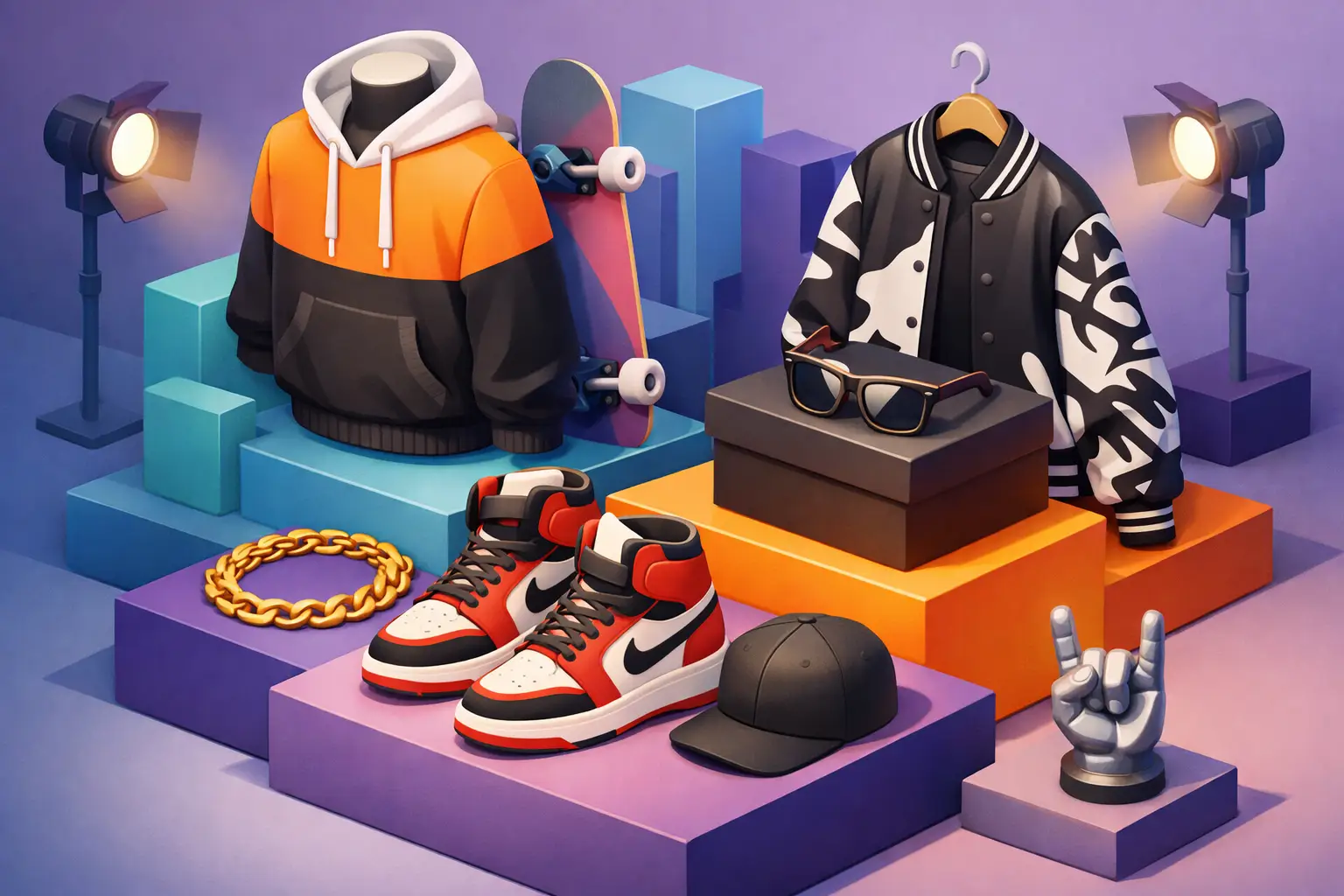
Some brands make clothes. Statement streetwear brands make a point.
That difference is the whole game. In streetwear, nobody cares that a tee is just clean. Nobody remembers a hoodie that only fits the trend cycle and says nothing else. The pieces that stick carry attitude, signal taste, and tell people where you stand before you even speak.
That is why statement matters. Not fake loud. Not graphic overload. Real point of view.
Why statement streetwear brands stand out
Streetwear has never been only about fabric. It has always been tied to identity, scene, and energy. Skate culture, hip-hop, graffiti, sneakers, DIY fashion, underground art - all of it shaped the way people wear clothes with intention. So when a brand enters that space, the question is not just, does it look good? The real question is, what is it saying?
Statement streetwear brands win because they understand clothing as language. A fit can signal confidence, resistance, humor, belonging, ambition, or pure creative chaos. The brand does not need to explain every detail if the message is already built into the design, styling, and attitude.
That is also why generic streetwear falls flat. If a label looks like it borrowed its whole personality from everybody else, people feel it fast. You can copy a silhouette. You cannot copy presence.
A statement is more than a loud graphic
A lot of people confuse statement with volume. Bigger print. Wilder colors. More shock. Sometimes that works. A hard-hitting graphic can absolutely carry a collection. But statement is not just about being seen. It is about being recognized.
There is a difference.
Anybody can throw a giant phrase on the chest and call it bold. That does not make it meaningful. The best streetwear brands know how to create tension between design and message. They know when to be aggressive and when to be restrained. Sometimes the strongest statement is in the wording. Sometimes it is in the cut. Sometimes it is in what the brand refuses to do.
That balance matters because streetwear audiences are sharp. They can spot forced edge in seconds. If the vibe feels manufactured, the piece loses weight.
What gives a streetwear brand real presence
A clear point of view
The strongest brands know who they are without sounding like a committee wrote the copy. Their world feels specific. Maybe it is rebellious. Maybe it is art-driven. Maybe it is rooted in a local scene. Maybe it plays with irony. Whatever it is, it feels intentional.
That kind of clarity shows up in everything. Product names. graphics. fit choices. campaign images. captions. Even silence. A brand with presence does not chase every conversation. It knows which ones belong to it.
Design that communicates fast
Streetwear is visual first. People scroll quick, judge quick, and remember what hits instantly. So statement brands build designs that land in one beat but still have enough depth to hold attention longer.
That could mean a sharp phrase, a symbol that becomes recognizable, or a color story that owns a mood. The trick is not complexity. The trick is clarity. If people have to work too hard to get the energy, the moment is gone.
Cultural awareness without cosplay
This one matters. Streetwear lives close to culture, but not every brand knows how to move in that space. Some reference music, neighborhoods, art, or social language with real connection. Others just sample the aesthetics and hope nobody notices.
People notice.
The brands that last understand the codes without faking belonging. They know where their voice comes from. They do not borrow credibility. They build it.
The trade-off between hype and substance
A lot of statement streetwear brands face the same tension. Do you make what sells fast, or do you hold the line on what the brand actually means?
That tension is real. A drop built around hype can move product. A safer design can reach more people. But the more a brand smooths out its personality for broad appeal, the more it risks becoming forgettable.
On the other hand, going too niche can box a label in. If every piece feels like an inside joke for a tiny scene, growth gets harder. Not impossible. Just harder.
The sweet spot is a brand that stays distinct while still giving people an entry point. You want enough edge to feel rare, enough clarity to feel wearable.
How statement streetwear brands build loyalty
People do not stay loyal to streetwear brands just because of product quality, though quality still matters. They stay because the brand helps them project something true.
Wearing a statement piece is part styling choice, part self-editing. You are choosing what people read first. That is why the most effective brands create emotional alignment. Their customers feel seen by the message, not just sold to by the marketing.
That connection gets stronger when the brand voice stays consistent. If the product says one thing and the content says another, trust fades. But when the whole brand speaks in one language, the audience starts wearing it like it belongs to them.
That is the zone. Not merchandise. Identity gear.
Statement streetwear brands and the problem with trend chasing
Trends move fast. Faster than most brands can design around them without looking late. That is why trend chasing is a weak foundation for statement labels.
Streetwear should feel current, yes. Dead energy kills a brand. But there is a difference between being culturally aware and being trend-dependent. If your whole identity is built on whatever is hot this month, the brand starts to look hollow the second attention shifts.
Statement streetwear brands usually pull from something deeper than trend reports. They might reference current silhouettes, color moves, or styling habits, but the core stays solid. The message still reads even after the trend peak passes.
That kind of durability matters more now because shoppers are more selective. Plenty of people still want heat, but they also want pieces that feel personal enough to keep in rotation after the algorithm moves on.
What shoppers should look for
If you are into streetwear and trying to separate real statement brands from brands that just mimic the look, pay attention to how the label behaves over time.
Look at consistency. Does the brand keep a recognizable voice, or does it switch personalities every few drops? Look at the graphics. Are they saying something, or just filling space? Look at the styling and campaign energy. Does it feel lived in or staged for approval?
Also pay attention to restraint. A confident brand does not need to shout on every inch of fabric. Sometimes one detail says more than ten. If a label knows how to edit itself, that usually means it knows what it stands for.
And yes, quality still counts. A powerful message on weak blanks only goes so far. Streetwear lives in the wear. If the piece cannot hold up, neither does the statement.
Why smaller brands can hit harder
Big brands have reach. Smaller brands often have sharper perspective.
That is not always true, but it shows up a lot in streetwear. Independent labels tend to move with less compromise. They can speak in a more direct voice, test ideas faster, and stay closer to the people actually wearing the product. That often gives them more edge than giant names chasing scale.
A brand like Fresh Po'Boy fits that lane when it stays focused on expression instead of trying to look like everybody else. That is where smaller labels win - not by being louder than the whole market, but by being clearer about what they represent.
The future of statement in streetwear
Streetwear is not getting quieter. But the next wave of statement is probably going to be smarter, not just louder.
People still want standout graphics and hard visuals. That will not change. What is changing is the audience tolerance for empty branding. The look alone is not enough anymore. Consumers want design with a pulse. They want brands with actual perspective, even if that perspective comes through in a single line on a sweatshirt or a specific way a fit is put together.
That raises the bar in a good way. It pushes brands to mean what they print and build worlds that feel real, not assembled.
The best thing a streetwear brand can do now is simple. Say something worth wearing.