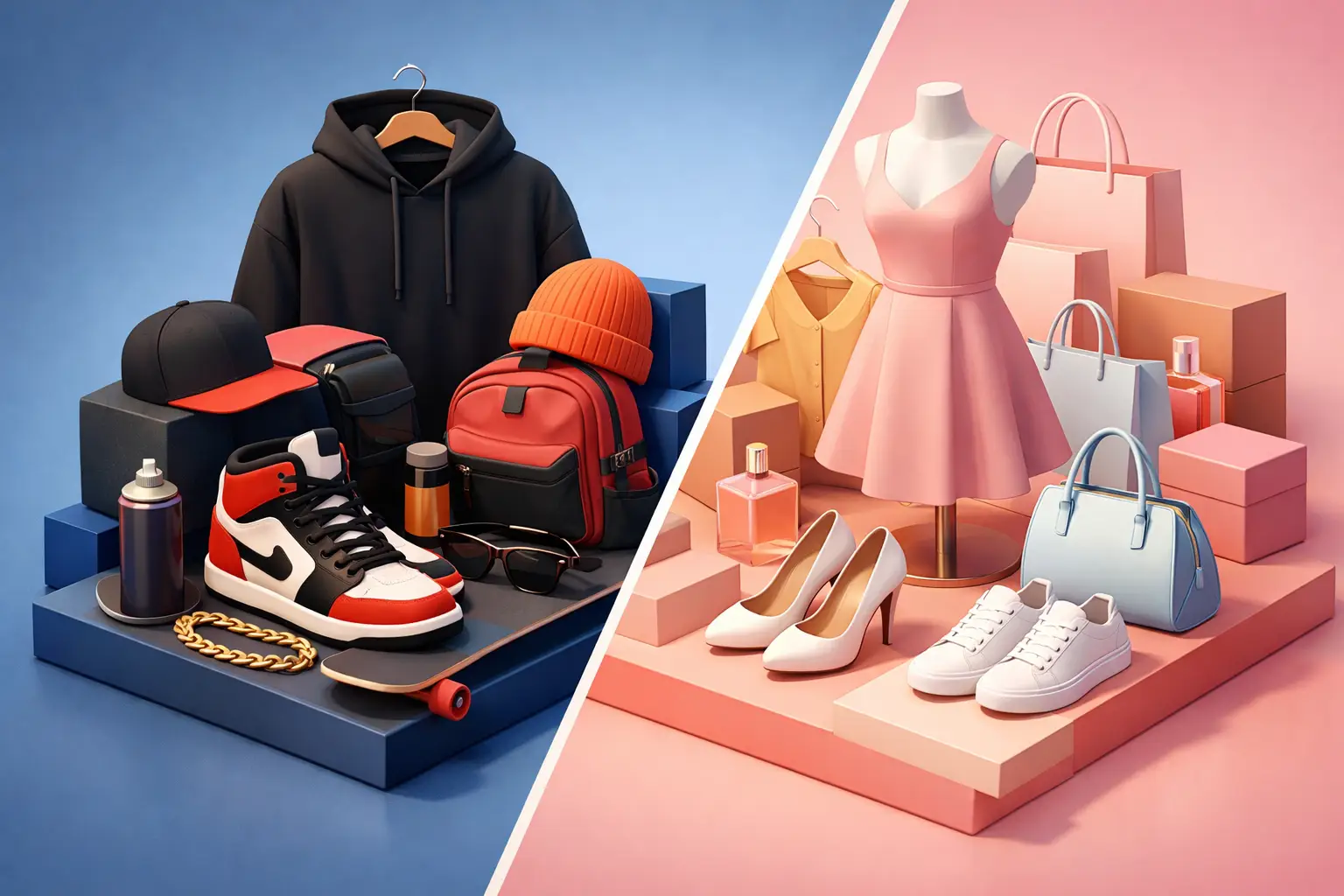
You can spot the difference before you read the tag. One piece feels like somebody meant it. The other feels like it was rushed from trend board to checkout page. That is the real tension in streetwear vs fast fashion - not just price, not just hype, but purpose.
People blur these two worlds all the time because both live online, both move with trends, and both sell clothes to style-conscious shoppers. But they are not built on the same idea. Streetwear is about identity, community, and point of view. Fast fashion is about speed, volume, and low-friction buying. Sometimes they overlap in silhouette. They almost never overlap in meaning.
Streetwear vs fast fashion starts with intent
Streetwear usually begins with a voice. A graphic says something. A fit references a scene. A drop has a mood, a point of view, or a cultural signal behind it. Even when the design looks simple, the message is often the real product.
Fast fashion starts somewhere else. It tracks what is getting attention, trims the risk, and pushes a version of it out fast. The goal is not to build a world around the piece. The goal is to move units while the trend is still hot.
That difference matters because clothes are not just fabric. For a lot of people, especially in streetwear, clothing is communication. It tells people what you are into, what you reject, what communities you move through, and how you want to be read. If the piece has no voice, it can still look decent. It just will not hit the same.
What streetwear is really selling
Streetwear is often misunderstood as oversized tees, cargo pants, sneakers, and graphics. That is the surface. The deeper layer is expression.
The best streetwear brands are not just selling garments. They are selling perspective. Sometimes that perspective comes from skate culture, hip-hop, art, DIY design, or regional style scenes. Sometimes it is more polished. Sometimes it is raw. Either way, there is usually a reason the piece exists.
That is why people get attached to streetwear in a way they rarely do with mass-market basics. A strong piece can feel personal. It becomes part of your rotation because it says something you would have said yourself, just louder.
This is also why limited drops, small-batch production, and distinct graphics matter in the category. They help preserve identity. Not every brand does this perfectly, and not every expensive hoodie has substance. But in real streetwear, the design is carrying more than trend. It is carrying attitude.
What fast fashion is optimized to do
Fast fashion is not trying to be your identity. It is trying to be available.
Its whole system is built around quick trend turnaround, lower prices, and high product volume. See something catching online? Fast fashion wants a version of it on site immediately. That speed is the value proposition.
For some shoppers, that works. If you need a look for one event, want to test a trend without spending much, or like constantly rotating your closet, fast fashion can feel convenient. That convenience is real. So is the trade-off.
The trade-off is usually in originality, construction, and staying power. A piece might look right for a month and feel forgettable by the next. The design can echo the aesthetic of streetwear without carrying any of the culture that gave it weight in the first place.
The culture gap is bigger than the style gap
This is where streetwear vs fast fashion gets real. A lot of fast fashion brands can copy the shape of streetwear. They can reproduce baggier fits, loud graphics, washed fabrics, and trend-coded details. But copying the look is not the same as understanding the language.
Streetwear comes from scenes. It grows out of music, skating, neighborhoods, art, local taste, internet subcultures, and people remixing what luxury and mainstream fashion ignored. It has history. It has references. It has an audience that can tell when something feels forced.
Fast fashion often strips all that context away. It turns a culture-rooted look into a quick visual product. That does not mean every shopper is doing something wrong by buying it. It means the meaning gets flattened. What was once a statement becomes just another trend cycle.
For a generation that cares about authenticity, that flattening matters. People want pieces that feel connected to something real, not just scraped from the feed and mass-produced by next week.
Price is not the whole story
A lot of people frame this as cheap versus expensive. That is too simple.
Yes, fast fashion is usually priced lower. Yes, streetwear can cost more, especially from established labels or limited drops. But price alone does not tell you whether a piece has value.
A lower-priced item can still be worth it if you know you will wear it hard. A higher-priced item can still be all branding and no substance. The smarter question is this: what are you paying for?
With strong streetwear, you are often paying for design point of view, smaller production runs, heavier materials, stronger finishing, and a clear identity. With fast fashion, you are usually paying for access - access to a trend, a silhouette, or a look without much commitment.
Neither purchase is automatically foolish. It depends on how you shop. But if your closet is supposed to reflect you, not just the algorithm, the cheapest route is not always the best one.
Quality changes the relationship
This part gets overlooked because people focus on aesthetics first. But quality shapes how a piece lives with you.
Streetwear, when done right, tends to value the feel of the garment as much as the graphic or fit. The tee has weight. The hoodie holds shape. The print does not crack after a few washes. The piece breaks in instead of breaking down.
Fast fashion is built under different pressure. Speed and cost control usually come first. That can mean thinner materials, weaker stitching, less consistent fit, and details that look solid online but feel lighter in hand.
Again, it depends. Not every streetwear piece is premium, and not every affordable piece is trash. But if you have ever had one hoodie become a favorite for two years while another went limp after six weeks, you already understand the difference.
Trend chasing versus style building
Fast fashion trains people to keep moving. New drop, new microtrend, new must-have, new cart. It is a cycle built on replacement.
Streetwear can be trend-aware, but at its best, it helps you build a style language. You start learning what fits you actually mess with, what graphics feel true to you, what colors you repeat, what brands line up with your taste. You stop dressing like a random mood board and start dressing like yourself.
That is a bigger shift than people realize. Personal style does not come from buying everything. It comes from editing. Streetwear gives you more room to do that because the category is rooted in identity, not just consumption.
That is part of why the right piece hits harder than ten forgettable ones. It sticks. It becomes yours.
So which one makes sense for you?
If you want quick, cheap, trend-based options with low emotional investment, fast fashion has a lane. No need to fake it.
If you care about originality, message, cultural weight, and wearing pieces that actually reflect who you are, streetwear makes more sense. That does not mean you need a closet full of rare drops or heavy price tags. It means buying with intention.
That might look like fewer pieces and better ones. It might mean supporting brands with a real point of view. It might mean passing on a viral look because it does not actually fit your taste. That is still style.
For people who use clothes as language, this is not a small difference. Streetwear speaks. Fast fashion repeats.
How to tell when a piece has something real
A good test is simple. Ask what the garment is saying beyond the trend. Is there a point of view in the cut, graphic, color, or concept? Does it feel like it came from a brand with taste, or from a machine trying to catch engagement?
Then check how it is made. Look at the fabric weight, the print quality, the fit consistency, and whether the piece feels wearable beyond one season. Hype fades fast. A strong piece stays in rotation.
That is where brands like Fresh Po'Boy live - in the idea that what you wear should say something with your chest, not just fill space in your closet.
The smartest closet is not the biggest one. It is the one that sounds like you when you walk in the room.