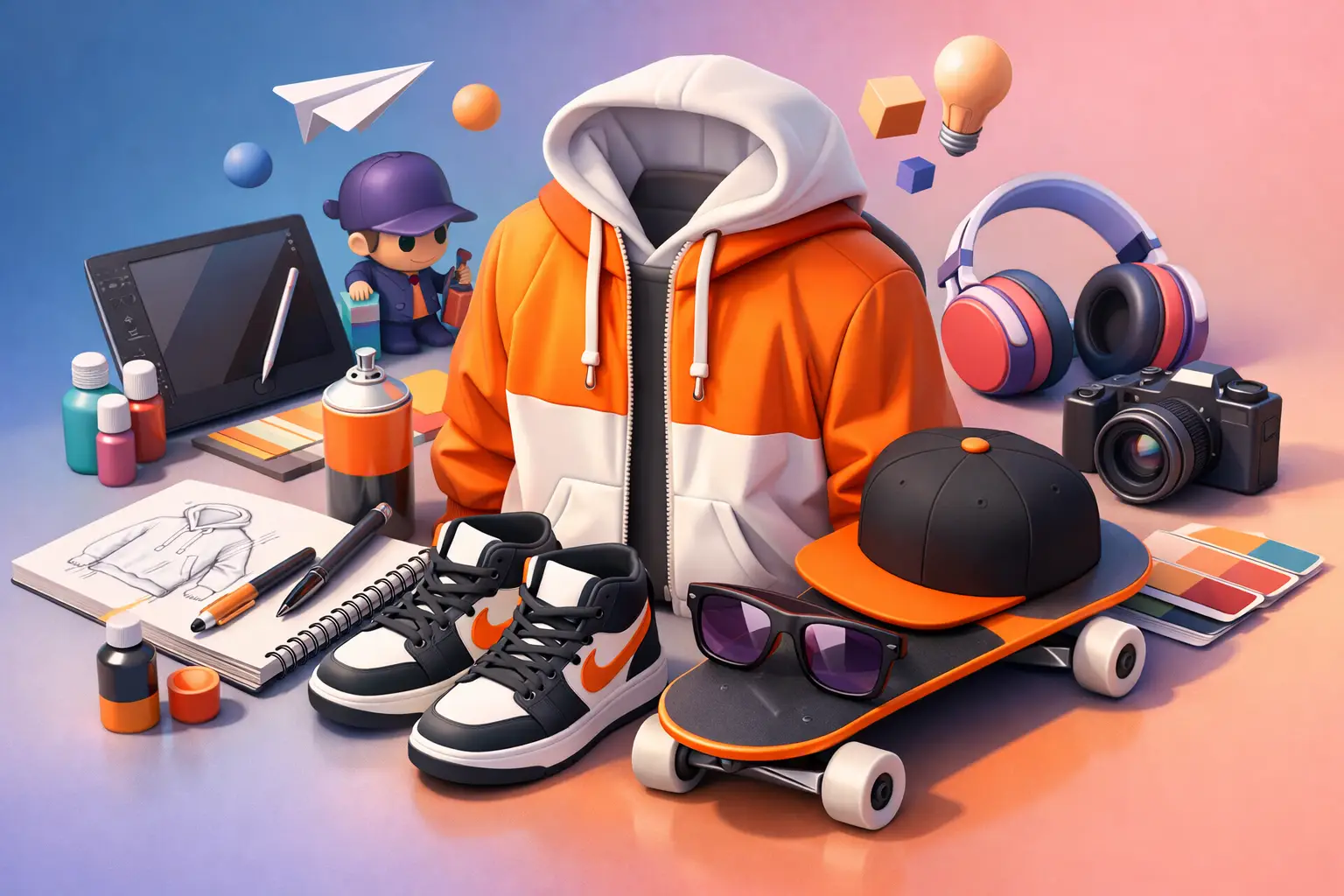
A blank hoodie can get the job done. But if you make things for a living - or for the love of it - getting dressed never feels that neutral. Your fit walks into the room before you do. It signals taste, mood, references, and how seriously you take your own voice. That is why streetwear for creatives hits different. It is not just about trends. It is about wearing a point of view.
The usual fashion advice misses that. It tells people to buy "versatile basics" and keep everything clean, safe, and easy to match. That works if your goal is to disappear into the background. Creatives usually want something else. Not louder for the sake of loud. More honest. More distinct. More you.
Why streetwear for creatives makes sense
Streetwear has always lived close to culture. Music, design, skate, film, graffiti, photography, nightlife - it pulls from scenes where taste gets built in real time. That makes it a natural lane for people whose identity is tied to what they make. You are not putting on a uniform. You are curating signals.
The best streetwear does two things at once. It feels immediate, and it feels personal. A graphic tee can carry attitude. A cropped jacket can sharpen your silhouette. Oversized pants can shift your whole energy from polished to untouchable. None of that is accidental. Shape, print, fit, and color all speak.
That matters for creatives because your work rarely exists in one clean category. Maybe you design by day and DJ on weekends. Maybe you shoot photos, edit video, and spend half your life bouncing between coffee shops, studios, and late-night linkups. You need clothes that can move across spaces without losing edge. Streetwear does that well when it is chosen with intent.
Streetwear is not costume
This is where a lot of people get it wrong. They treat creative style like a performance. Every piece has to scream. Every look has to be complicated. The result is usually forced.
Real personal style has tension. Some pieces talk. Some pieces hold it down. If everything is loud, nothing lands. A heavyweight tee with the right cut can carry more presence than a jacket trying too hard. A clean monochrome fit with one sharp graphic can feel stronger than five trend-driven layers fighting for attention.
Streetwear for creatives works best when it looks lived in, not assembled for approval. The fit should feel like an extension of your taste, not proof that you know what is trending on your feed this week.
What to look for in streetwear for creatives
Start with silhouette. Before graphics, before color, before hype, shape is the first thing people clock. Boxy tees, wide-leg pants, cropped outerwear, oversized hoodies - these choices change your whole message. A slimmer fit can read sharper and more controlled. A relaxed fit can feel effortless and more culturally tapped in. Neither is automatically better. It depends on your energy and what you are trying to project.
Then comes graphic language. This is where streetwear separates itself from basic apparel. Good graphics do not just decorate. They frame attitude. Sometimes that means bold text. Sometimes it means strange imagery, satire, references, or visual tension. The key is choosing pieces that still feel like you six months later. Trend graphics burn out fast. A strong visual point of view stays useful.
Fabric matters more than people admit. Creatives tend to keep pieces in heavy rotation, and cheap fabric shows its weakness fast. Thin tees lose structure. Hoodies lose shape. Prints crack. If a piece is supposed to carry your identity, it needs enough weight and texture to feel real. Good streetwear should survive repetition. That is the point.
Color is another decision people overcomplicate. You do not need to dress like a highlighter to stand out. Neutrals with one disruptive tone often hit harder than a full palette. Black, cream, charcoal, faded olive, washed brown - these build a strong base. Then you add signal. Red. Cobalt. Slime green. Silver. Whatever fits your lane. The contrast gives the look tension.
Dress for the kind of creative you are
Not every creative should dress the same. That sounds obvious, but a lot of style content flattens everyone into one formula.
If you are visual - designer, photographer, illustrator, art director - your fit can lean graphic and considered. Strong shapes, intentional layering, pieces that show you understand composition. You do not need excess. You need control.
If you work in music, your style can hold more attitude. Texture, statement graphics, heavier footwear, louder accessories. The fit can feel less studied and more instinctive. That slight chaos works when it is anchored by confidence.
If you are a maker behind the scenes - editing, producing, building, styling, directing - function matters too. You need movement. Pockets help. Layers help. Durable pieces matter. The look still needs edge, but it cannot be precious.
This is the real move: dress in a way that supports your process, not just your mirror. Great creative style looks good in motion. Walking, working, hauling gear, sitting on set, showing up late, staying out longer than planned. If it only works for one photo, it is probably not your uniform.
Build a wardrobe that says something
The smartest creative wardrobes are not huge. They are specific.
You want a foundation of pieces that always work: a heavyweight tee with structure, a hoodie that holds its shape, pants with a strong leg, outerwear that changes the whole fit, and sneakers or boots with presence. From there, bring in the pieces that carry your signature. Maybe that is text-heavy graphics. Maybe it is washed finishes. Maybe it is oversized proportions. Maybe it is one recurring color you always come back to.
This is where a brand like Fresh Po'Boy makes sense. Streetwear That Speaks is not just a tagline. It is the whole point. The right piece should feel like it already knows what you are trying to say.
Still, there is a trade-off. If every item in your closet is trying to be the hero, getting dressed becomes work. Too many statement pieces can cancel each other out. The sweet spot is a wardrobe with a clear voice and enough restraint to let that voice land.
Trend awareness matters. Trend chasing does not
Creatives are usually early on references. You know what is bubbling before it hits mass retail. That can be an advantage, but it can also turn into a trap.
Not every trend deserves your money. Some trends are just styling tricks with a short shelf life. Others genuinely shift the shape of streetwear and open up new ways to wear things. The difference usually comes down to whether the trend fits your existing taste. If it strengthens your identity, it is useful. If it replaces your identity, leave it alone.
That is especially true now, when everything moves fast and everyone is overexposed to the same inspiration. The challenge is no longer finding cool pieces. It is editing. Picking what deserves space in your wardrobe and what only looked good because the algorithm showed it to you twelve times.
The best fit is the one that feels like language
That is the part people outside streetwear miss. Clothing is not shallow just because it is visual. For creatives, visual language is still language. A fit can communicate humor, sharpness, resistance, nostalgia, precision, swagger, or restraint before a single word gets said.
That is why the right hoodie matters. Why the right tee matters. Why the shape of your pants and the weight of your jacket matter. These are not small details when your whole life is built around making something out of taste.
Streetwear for creatives should not flatten you into a category. It should give your point of view a body. It should help you show up like you already know who you are, even on the days when the work feels messy.
Wear pieces that carry your signal. Keep the rest out of the way. Let your clothes speak, but make sure they are saying something worth hearing.