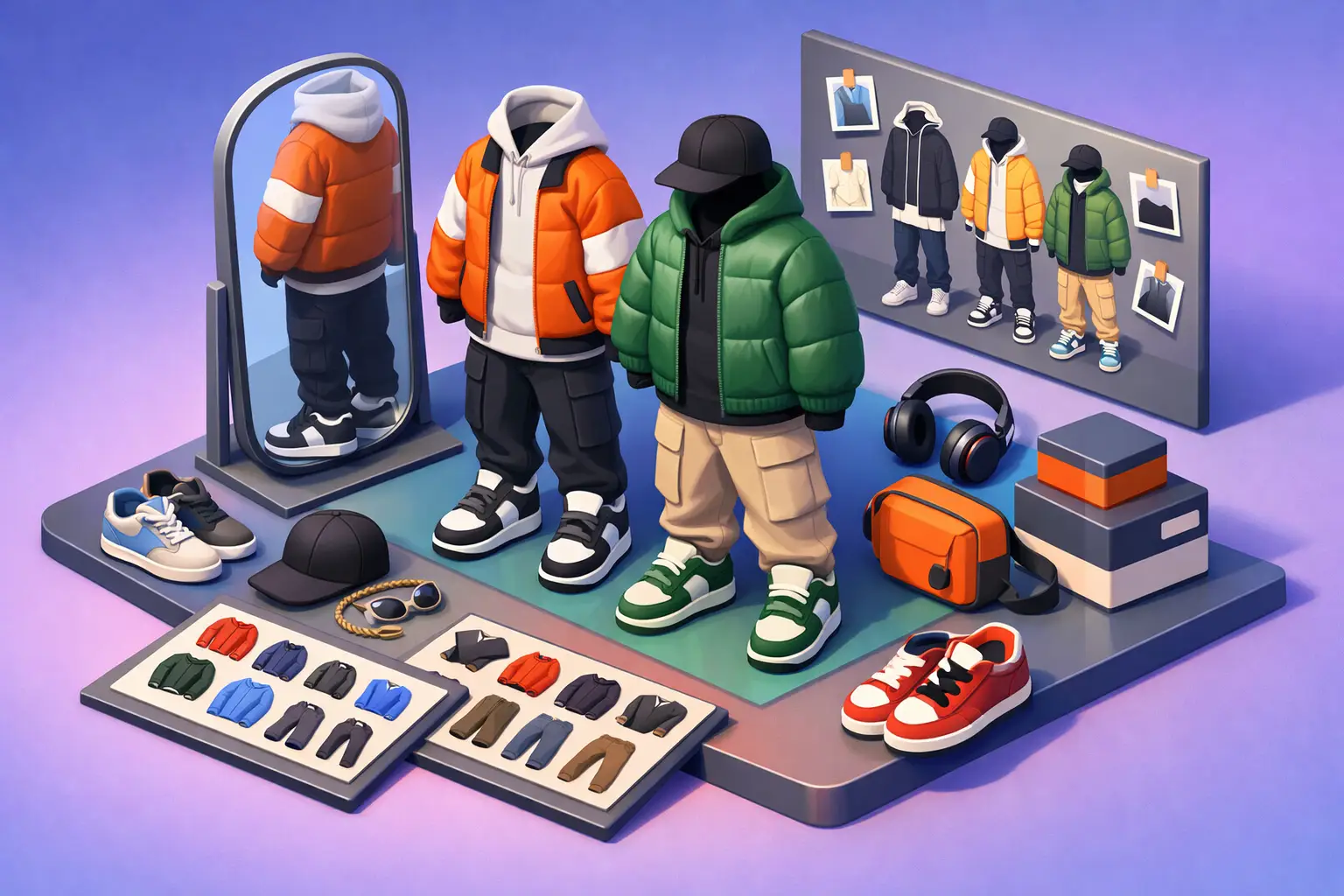
You can spot a forced outfit fast. The tee is too tight, the cargos are swallowing the shoes, and the whole look feels like someone copied a mood board without understanding proportion. That is exactly why a streetwear fit guide for beginners matters. Streetwear is not just about buying the right pieces. It is about how they sit, stack, crop, drape, and move when you wear them.
The good news is you do not need a closet full of rare drops to get this right. Fit does more work than hype. A basic hoodie with the right shape will hit harder than an expensive one that wears you instead of the other way around.
What fit means in streetwear
In most style conversations, people talk about size like it is the whole game. It is not. Size is the number on the tag. Fit is the silhouette on your body.
That difference matters. Streetwear has always played with volume, shape, and attitude. Sometimes that means oversized. Sometimes it means boxy. Sometimes it means loose through the leg with a cleaner top half. The point is not to wear everything baggy just because streetwear has that reputation. The point is to make proportions look intentional.
A clean fit usually does three things. It gives you room to move, creates a shape that looks balanced, and matches the energy of the outfit. If your top is huge and your pants are huge and your shoes are tiny, the look can collapse. If your tee is slim and your pants are wide, that can work, but only if the rest of the outfit supports it.
The streetwear fit guide for beginners starts with silhouette
Before you think about brands, think shape. Every strong outfit has a silhouette. That is the outline people read first.
For beginners, the easiest move is to build around one relaxed piece and one controlled piece. A roomy graphic tee with straight-leg pants. A boxy hoodie with cleaner denim. Wide cargos with a cropped jacket. This gives the outfit tension without making it messy.
If everything is oversized, you need structure somewhere else. That might come from a heavier fabric, a cropped hem, or bulkier sneakers that can hold the visual weight. If everything is slim, the look can lose that streetwear edge and feel more basic than bold.
This is where a lot of people miss. Oversized does not mean one or two sizes too big in every item. Real oversized fit is designed that way - dropped shoulders, wider body, shorter or more deliberate length. Randomly sizing up can make clothes look stretched out instead of styled.
Start with the shoulders and length
The shoulder line tells the truth. If a tee or hoodie fits well in the shoulders, the rest usually falls better. In streetwear, dropped shoulders are common, so you have room to play. But there is still a difference between relaxed and sloppy.
For tees, a beginner-friendly fit is slightly loose in the chest with sleeves that hit around mid-bicep to just above the elbow. Length should usually land around the hip area. Too long, and it starts reading like sleepwear. Too short, and the proportions can feel off unless that cropped shape is intentional.
For hoodies and sweatshirts, look for a boxier body instead of extra length. Streetwear often looks better when the piece has width and shape, not just fabric hanging everywhere.
Pants set the tone
Pants can make or break the whole fit. If you are new to streetwear, start with straight, relaxed, or slightly baggy pants. That could mean cargos, carpenter pants, relaxed denim, or workwear-inspired trousers.
Skinny jeans fight against most modern streetwear silhouettes. Super-baggy pants can work, but they are harder to balance if you do not know what you are doing yet. The sweet spot is usually enough room through the thigh and calf to create shape, without so much excess fabric that the pants puddle out of control.
Pay attention to the break at the shoe. A little stacking can look good. Too much stacking can make the outfit look short and heavy. Cropped or cleaner hems can sharpen up chunkier sneakers. Wider pants over slimmer shoes can also work, but you need some contrast up top so the outfit does not drag.
How your main pieces should fit
A good streetwear fit guide for beginners should keep this simple. Focus on the big four: tees, hoodies, outerwear, and pants.
Tees
The ideal streetwear tee usually has a relaxed chest, slightly dropped shoulders, and a shape that feels boxy rather than clingy. Heavyweight cotton helps because it holds structure. Thin tees tend to collapse and lose that clean silhouette.
If you want an easy rule, your tee should skim the body, not hug it. You want air between the fabric and your frame. That gives graphics more presence and makes layering easier.
Hoodies and crewnecks
These should feel easy, not tight at the waist or arms. A little volume in the sleeves gives that laid-back shape streetwear does well. Ribbing at the cuffs and hem helps keep things clean.
If your hoodie is oversized, pair it with pants that are relaxed but not massive. If your hoodie is more standard, you can push the pants wider. The trade-off is balance. Bigger top means calmer bottom. Bigger bottom means the top should still feel intentional.
Jackets
Streetwear jackets work best when they add shape. Bombers, puffers, denim jackets, varsity jackets, and work jackets all bring structure fast. The fit should leave room for a tee or hoodie underneath without looking stuffed.
Cropped jackets can be especially strong because they sharpen wide pants and make the whole outfit feel more designed. Longer jackets are trickier. They can work, but they often pull a look away from streetwear and into a different lane.
Pants and cargos
Go for movement. You should be able to sit, walk, and bend without the pants fighting you. Relaxed through the seat and thigh is usually the move. From there, decide whether you want a straight leg, slight taper, or full wide leg.
Cargos naturally add volume, so pair them with cleaner tops if the pockets and details are already doing a lot. Simpler pants let you go louder up top.
Shoes change the proportions
Sneakers are not just the finish. They are part of the fit. Chunkier shoes can support baggier pants and oversized tops because they hold visual weight. Slimmer shoes can look clean, but they can get lost under wide hems if the proportions are off.
This does not mean every streetwear outfit needs bulky sneakers. It means your shoes should make sense with the rest of the silhouette. Low-profile pairs work better with cropped pants, cleaner breaks, or more fitted tops. Heavier shoes can carry wider legs and bigger outerwear.
Socks matter too. A visible sock can create a break between pant and shoe and make the outfit feel more considered.
Fit mistakes beginners make
The biggest mistake is chasing oversized without understanding shape. Bigger is not automatically better. If the fabric bunches everywhere, sleeves drown your hands, and the hem drops too low, the outfit stops looking confident.
The second mistake is ignoring fabric. Fit is not only cut. Material changes everything. Heavy cotton, fleece, denim, twill, and nylon tend to hold shape better than thin, stretchy fabrics. Structure makes even simple pieces feel stronger.
The third mistake is forcing trends that do not match your build or your style. Not every wide pant works for every person. Not every cropped jacket feels natural on everybody. Streetwear should still feel like you. If you look uncomfortable, people can read that fast.
Build your fit before you build your collection
If you are starting from zero, do not buy ten random pieces. Get a few staples that teach you proportion. A boxy tee. A hoodie with shape. Straight or relaxed pants. One jacket with structure. One or two sneakers that work with multiple silhouettes.
Wear them in different combinations and pay attention to what feels right. Take mirror photos. Look at where the shirt hits, how the pants fall, whether the shoes ground the outfit. Styling gets easier when you start seeing your own proportions instead of copying somebody else's.
That is the real shift. Streetwear is personal. It has attitude because it reflects point of view. Fresh Po'Boy lives in that lane - clothes that say something. But before your graphics speak, your fit already said a lot.
How to know when the fit is right
The right fit looks intentional from every angle. Nothing feels accidental. The clothes move with you. The proportions make sense. You are wearing the outfit, not getting buried by it.
And no, there is not one perfect formula. Some people look best in cleaner silhouettes. Some can really carry volume. Some like cropped layers and stacked pants. Others want a more stripped-back look. It depends on your frame, your taste, and the mood you are trying to put out.
Start with balance. Learn what relaxed actually means on your body. Let structure do some of the work. Then push further once your eye gets sharper.
The best streetwear fits do not scream try-hard. They feel easy, but never random. That is the target. Get the fit right, and even the simplest outfit talks loud.