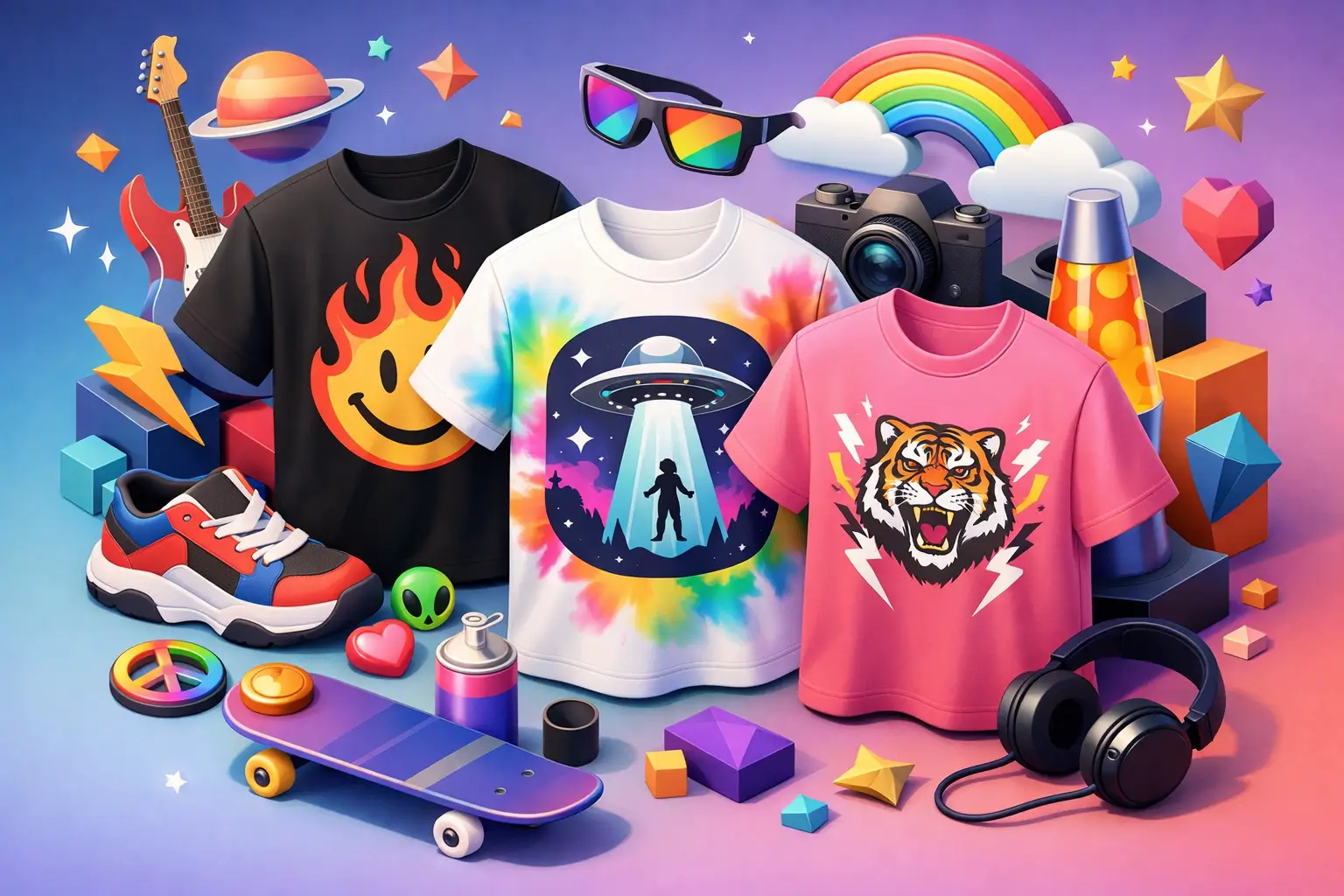
You can learn a lot about somebody before they say a word. The tee says it first. That is why graphic tees for self expression still matter in a fashion cycle full of copy-paste fits, trend dumps, and brands chasing whatever is hot for two weeks.
A real graphic tee does more than fill space in an outfit. It signals taste. It shows humor, anger, nostalgia, pride, or refusal. It can nod to music, art, politics, neighborhood energy, internet culture, or a mindset you do not feel like explaining out loud. When it is done right, it feels less like merch and more like language.
That is the pull. People are not just buying cotton and ink. They are buying a way to be seen.
Why graphic tees for self expression still matter
Streetwear has always been bigger than clothes. It came up through scenes where what you wore told people what you were into, where you stood, and who you stood with. A graphic tee sits right in the center of that. It is one of the clearest pieces in any wardrobe because the message is out front, no decoding required.
That directness is the whole point. A jacket can suggest. Sneakers can hint. A tee can state. That matters for people who do not want their look watered down into something safe and generic.
There is also a reason graphic tees have lasted while other statement pieces come and go. They are accessible. You do not need a full archive closet or a huge budget to wear something with personality. One strong tee can shift the energy of basic pants, simple denim, cargos, or shorts. It gives people room to build a fit without losing the message.
Still, not every graphic tee actually says anything. Some are loud but empty. Some feel manufactured, like a design team tried to reverse-engineer edge in a conference room. That is the trade-off. The category is powerful, but it is also crowded with fakes, copies, and graphics that look cool for five seconds and mean nothing after that.
What makes a graphic tee feel personal
The best graphic tees for self expression do not try to please everybody. They choose a lane.
Sometimes that lane is visual. A distorted photo print, handstyle lettering, punk collage, sports reference, anime nod, or bold type treatment can say enough without a full slogan. Other times it is all about the phrase. Sharp words. Dry humor. A line that feels like a personal code.
What makes it personal is not just the design itself. It is the connection between the wearer and the design. A tee can hit because it reflects where you grew up. Because it matches your music taste. Because it carries a mood you live in. Because it says what you are tired of saying to people directly.
That is why the same shirt can feel powerful on one person and empty on another. Self-expression is not about the loudest print in the room. It is about alignment.
Fit matters too. The message may be on the chest, but the silhouette changes the meaning. An oversized tee can feel effortless, rebellious, or rooted in skate and streetwear culture. A more structured fit can sharpen the same graphic and make it feel intentional in a different way. Cropped, boxy, faded, washed, heavyweight, paper-thin - each version speaks with a different accent.
The difference between expression and costume
This is where people get it wrong. Wearing a graphic tee is not the same as having style.
A lot of outfits look assembled for approval. The right sneaker, the right pants, the right accessories, the right reference points. Nothing is technically off, but the whole thing feels borrowed. That happens when the tee is treated like a trend piece instead of a personal one.
Expression has tension. It is not always polished. It might clash a little. It might pull from different influences. It might say something a smaller crowd understands. That is usually a better sign than a fit that looks perfectly optimized for social media.
There is no prize for looking like everyone else in limited drops.
A strong tee should feel like a continuation of your taste, not a substitute for it. If the graphic is doing all the work while the rest of the outfit feels disconnected, the result can slide into costume fast. But when the tee fits your actual world, everything else starts to look more natural.
How to wear graphic tees for self expression without forcing it
Start with the message, then build around the mood. If the tee is aggressive, ironic, artistic, or stripped back, let the rest of the fit support that energy instead of competing with it.
If you are wearing a loud graphic, cleaner pants and shoes usually keep it from turning chaotic. If the design is minimal but sharp, you have more room to push texture, layers, or bolder accessories. There is no single formula, but balance matters.
Color matters too. Some people choose graphics based only on the print and forget the base tee has to work in real life. Black, white, faded charcoal, cream, and washed tones tend to hold up because they move with more outfits. Brighter colors can hit hard, but they ask more from the rest of the look.
The same goes for references. A tee tied to a very specific moment, meme, or trend can feel current right now and stale six months later. That does not mean avoid timely graphics. It just means know what kind of shelf life you want. Some shirts are for a season. Some become part of your uniform.
And yes, quality counts. If a shirt carries a strong idea but feels cheap, twists after two washes, or loses its print fast, the message does not land the same. Good self-expression still needs a solid blank, a fit with intention, and printing that lasts.
When a tee says too much
Not every message needs to be worn. That is part of having taste.
Some graphics are overexplained. Too much text. Too many visual cues. Too much trying. A shirt does not become more expressive just because it is crammed with ideas. In a lot of cases, restraint hits harder.
The strongest statement tees usually leave a little space. They give people something to catch, not a full paragraph to read. That space creates intrigue, which is usually more powerful than oversharing.
There is also the question of authenticity. Wearing a graphic tied to a culture, issue, or scene you have no real connection to can read hollow fast. Fashion borrows constantly, but people can tell when a tee reflects real affinity and when it is just aesthetic sampling. That does not mean you need permission to wear everything. It just means awareness matters.
Why this piece stays relevant in streetwear
Trends change. The need to say who you are does not.
That is why the graphic tee keeps surviving every wave of minimalism, luxury basics, and trend fatigue. It remains one of the few pieces that can be casual, visual, and personal at the same time. It does not ask for a whole speech. It gives you one frame and lets you wear it your way.
For streetwear brands, that makes the tee more than an entry product. It is often the clearest statement of identity. The graphic tells you what the brand notices, what it values, what it jokes about, what it refuses, and what kind of person it wants wearing it. When a brand gets that right, people are not just buying a look. They are buying into a point of view.
That is also why people keep coming back to brands that feel like they actually stand for something. Fresh Po'Boy gets that tension between style and statement. The tee is not background noise. It is the voice.
Choosing the right graphic tee for self expression
The right one usually gives you a reaction fast. Not because it is shocking, but because it feels familiar in the right way. You see it and think, yeah, that is me, or at least that is a side of me I want outside.
If you have to talk yourself into it because it looks like what everyone else is wearing, leave it. If the graphic is cool but the fit is off, leave it. If the message feels borrowed, leave it. The best tee is not the one getting the most hype. It is the one that still feels true when the hype moves on.
Wear the piece that says something real, even if the room does not get it right away. That is usually the one worth keeping.